
Floor Seating Through History: From the Saharan Tent to the Arab Majlis and the Cultures of the East
A journey through the history of floor seating: from the Hassani tent and the Arab majlis to the Ottoman divan and Japanese tatami, all the way to the Sahrawi majlis in our homes today.
Floor seating is more than a way of furnishing a home: it is a memory shared by many peoples who made the floor a place of hospitality, evening conversation and counsel. From the desert tent to the majlis of the Gulf, from the palaces of Istanbul to Japanese and Korean homes, sitting close to the ground has remained an expression of humility, warmth and generous welcome. In this article we trace, as far as reliable sources allow, how this tradition began, how it evolved, and the cultures best known for it.
When did floor seating first appear?
Historians have no precise date for the “appearance” of floor seating, since sitting on the ground seems older than any piece of furniture. The better question is: when did the chair appear? In ancient Egypt, publications of the Metropolitan Museum of Art note that the chair was a mark of status, while ordinary people mostly sat on the floor on mats and rugs, or on small stools.
Among the oldest material evidence of floors covered with textiles is the “Pazyryk carpet”, discovered in 1949 in a burial mound in the Altai Mountains and now held by the State Hermitage Museum in Saint Petersburg. Dated to the 5th–4th centuries BC, it is considered the oldest known knotted-pile carpet. Where it was made is still debated among scholars.
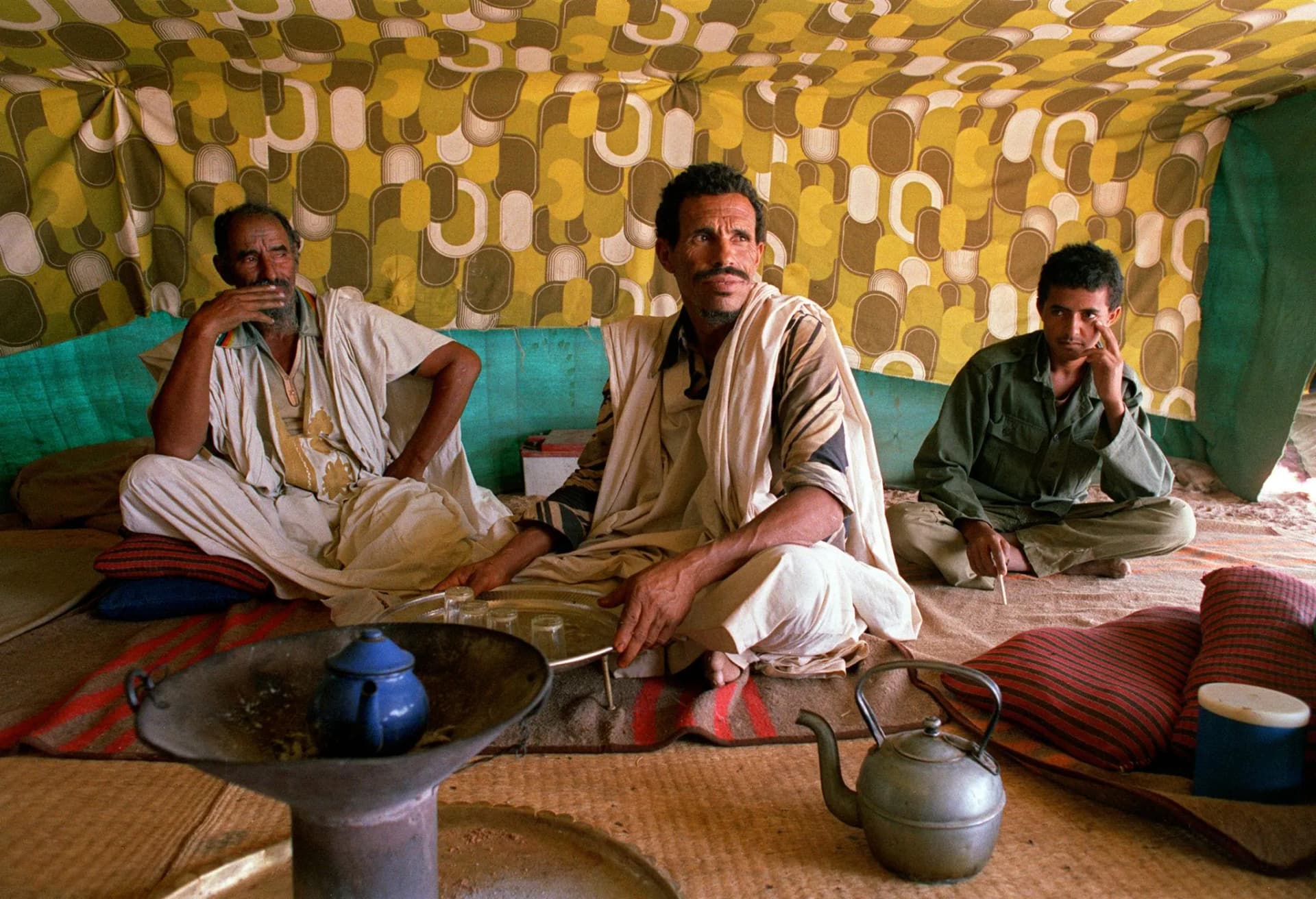
The Hassani khaima: the first majlis of the desert
In Hassani society in the Sahara, the tent (khaima) was the heart of nomadic life. Sources on Saharan heritage record that its cloth was traditionally woven from camel and goat hair, and that women spun, wove and sewed it together in a collective effort known as “twiza”, accompanied by tea and conversation.
Inside the tent, the floor was covered with mats and rugs, and people leaned against embroidered leather cushions called “assarmi”; the round ones are known as “marfag”. Around the tea tray, a ritual at the centre of Saharan hospitality, the majlis came together: for conversation, poetry, sharing news and welcoming guests.
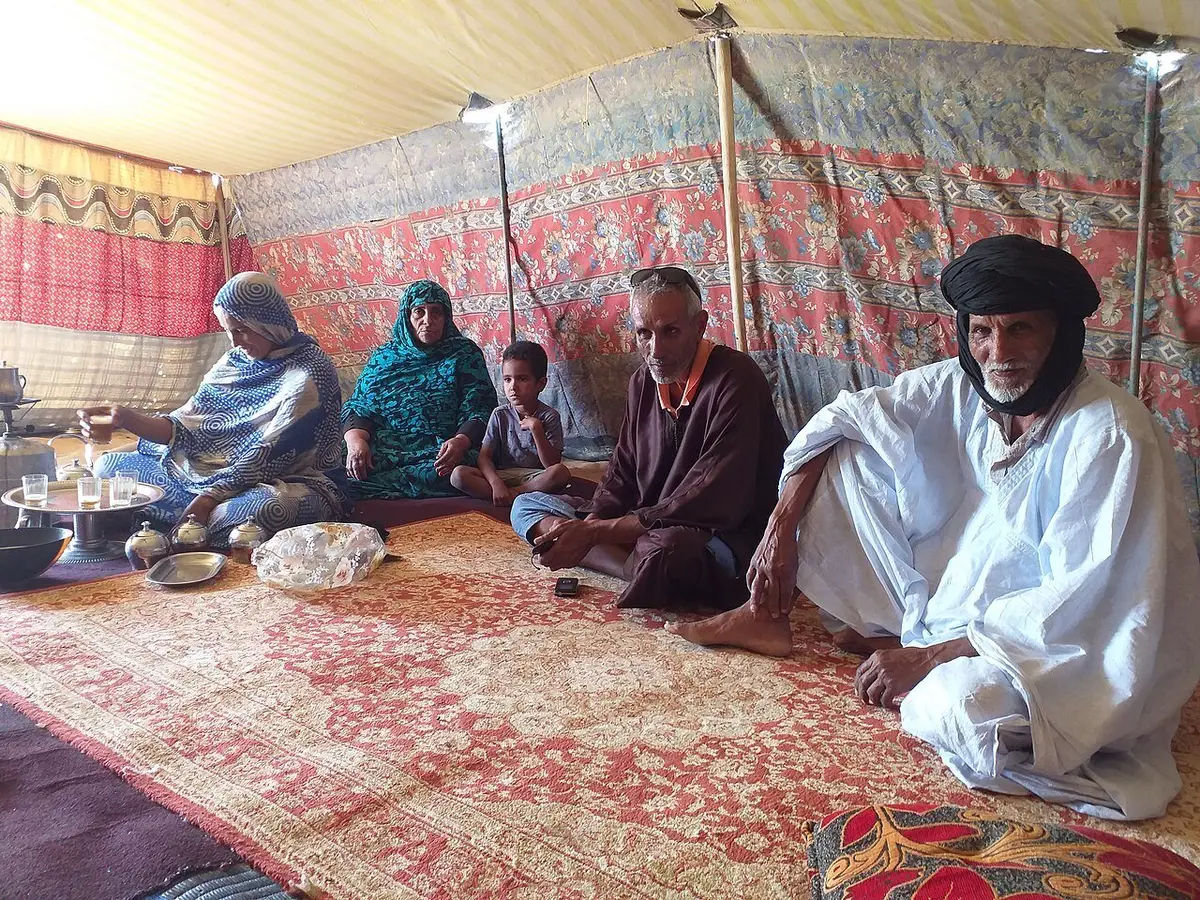
A tea break in a herders’ tent in Mauritania, part of the wider Hassani cultural area and its floor-seating tradition.
Photo: Cooperazione, via Wikimedia Commons, licensed CC BY-SA 4.0
The Arab majlis of the Gulf and the Arabian Peninsula
The word “majlis” comes from the Arabic verb “to sit”, and in the Gulf and the Arabian Peninsula it is a social space in its own right. In 2015 UNESCO inscribed “Majlis, a cultural and social space” on the Representative List of the Intangible Cultural Heritage of Humanity, following a joint nomination by the United Arab Emirates, Saudi Arabia, Oman and Qatar.
UNESCO’s file describes the majlis as usually a large space with carpets on the floor and cushions lining the walls, with a hearth for preparing coffee and hot drinks. Disputes are settled there, condolences offered and weddings celebrated, while folk tales and Nabati poetry pass from one generation to the next: by accompanying their elders, young people learn the etiquette of dialogue, listening and respect for others.
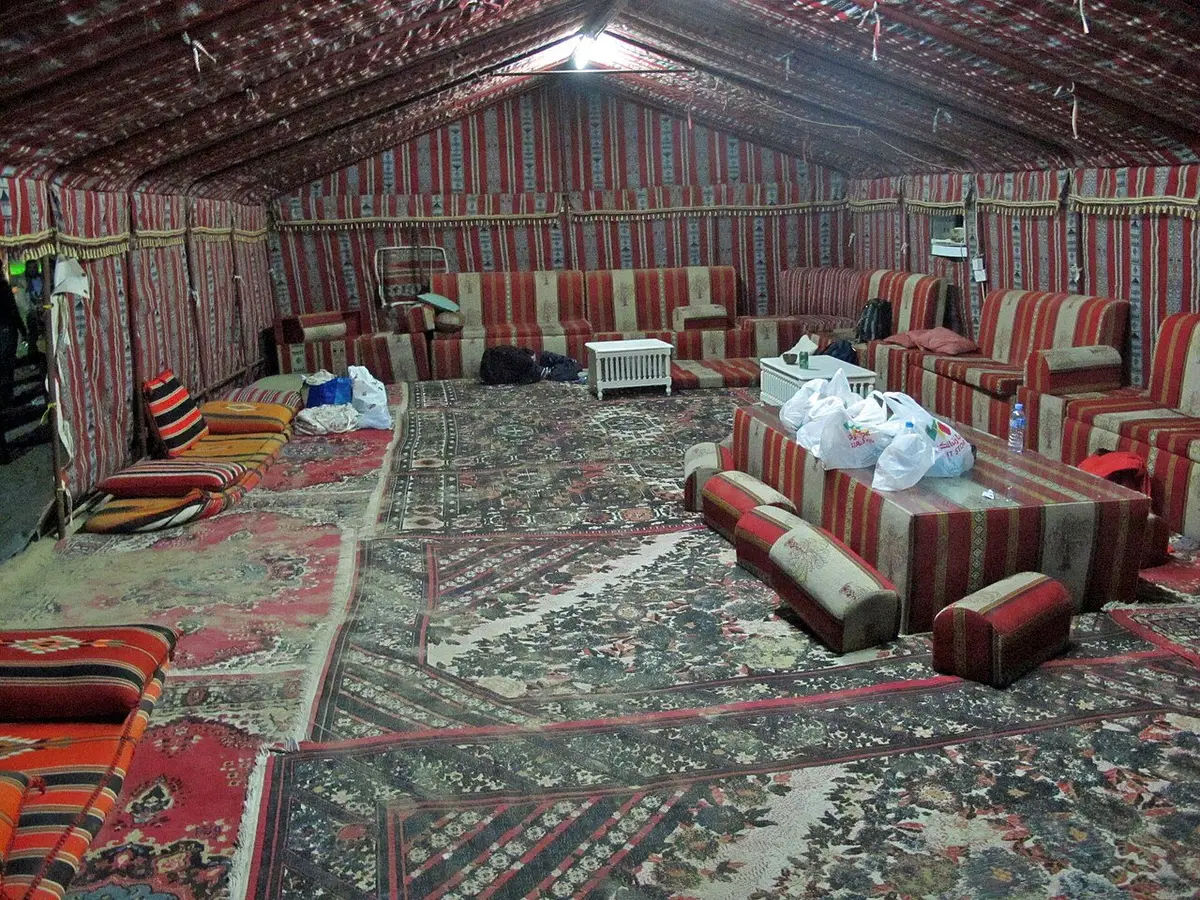
A majlis in a tent in southern Qatar: carpets on the floor and cushions along the sides, just as UNESCO’s file describes.
Photo: Maggie Jones, via Wikimedia Commons, Public Domain Mark
Morocco: the traditional salon and Amazigh weaving
In the Moroccan home, the “sedari” is a low banquette lining the walls, often in an L or U shape around the salon, with a low table in the middle. Its origin is sometimes attributed to Andalusian influence, a popular account that academic sources have not yet settled.
In the mountains, Amazigh women of the Middle Atlas wove rugs from sheep’s wool that were historically used as bedding and as blankets against the cold, and sometimes to cover the floor, making them an integral part of a way of life lived close to the ground.
From Persia to Istanbul: the divan and the sedir
The word “divan” has a remarkable linguistic history. Of Persian origin and meaning “register”, it named the first diwan in Islam, set up under Caliph Umar ibn al-Khattab as a register of stipends, and later widened to mean an office and a council of state. Dictionaries note that the word then passed to the long seat running along the walls of those halls: a mattress laid on the floor or on a raised platform, with cushions to lean on. In Turkish this seat is also called a “sedir”.
Through the Ottoman Empire the word entered European languages; the 1911 Encyclopædia Britannica states that the divan as a piece of furniture was known in Europe from about the middle of the 18th century, and was especially fashionable between 1820 and 1850.
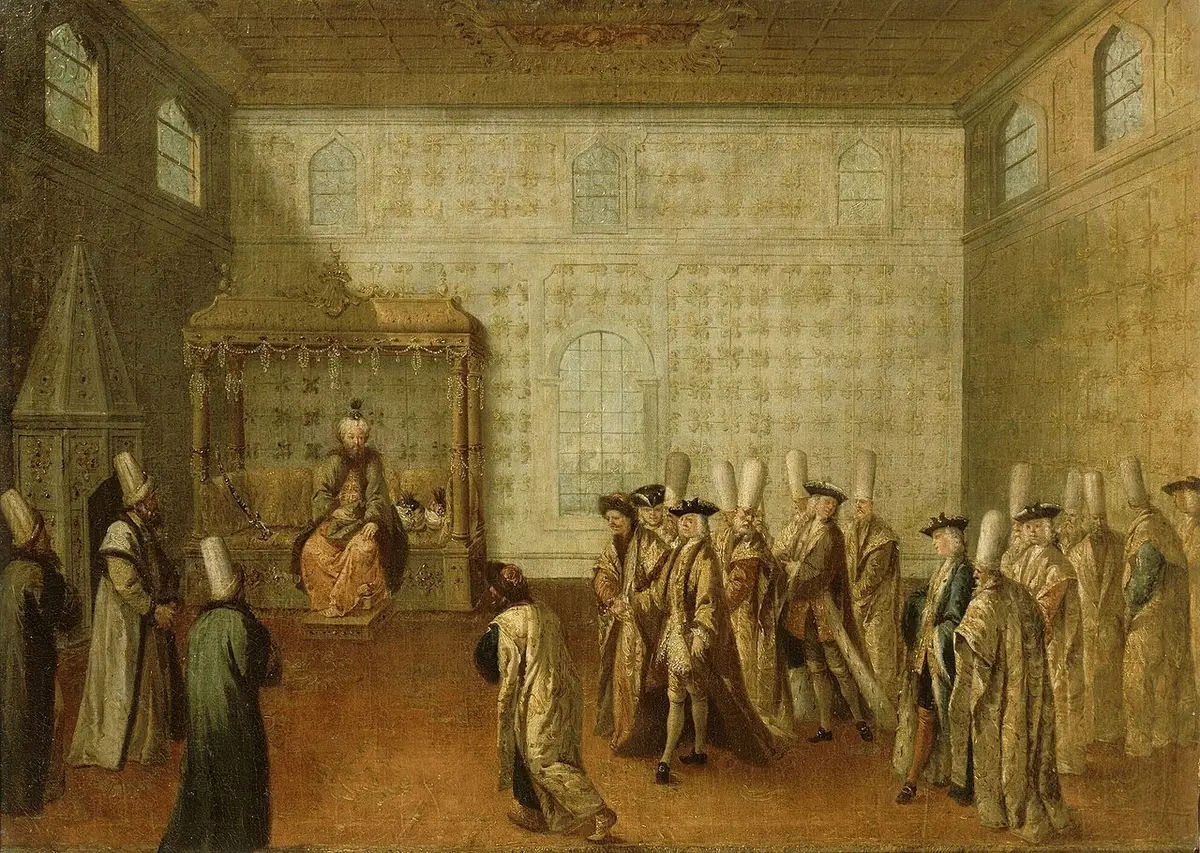
Sultan Ahmed III receiving the French ambassador Charles de Ferriol in the audience hall of Topkapı Palace, by Jean-Baptiste Vanmour (Palace of Versailles).
Photo: Jean-Baptiste van Mour, via Wikimedia Commons, public domain
The Far East: Japan and Korea
Tatami and zabuton in Japan
In Japan, tatami began as a luxury of the nobility. In the Heian period (794–1185), the floors of aristocratic residences were mostly wooden, and tatami was laid only as seating for people of rank. It gradually came to cover whole rooms, starting with smaller ones, as the “shoin-zukuri” architectural style developed in the Muromachi period; a room fully laid with tatami became known as a “zashiki”, literally “a room spread for sitting”. The “zabuton” cushion evolved from a thin cushion used in the Heian period; the cotton-stuffed version spread widely only relatively late.
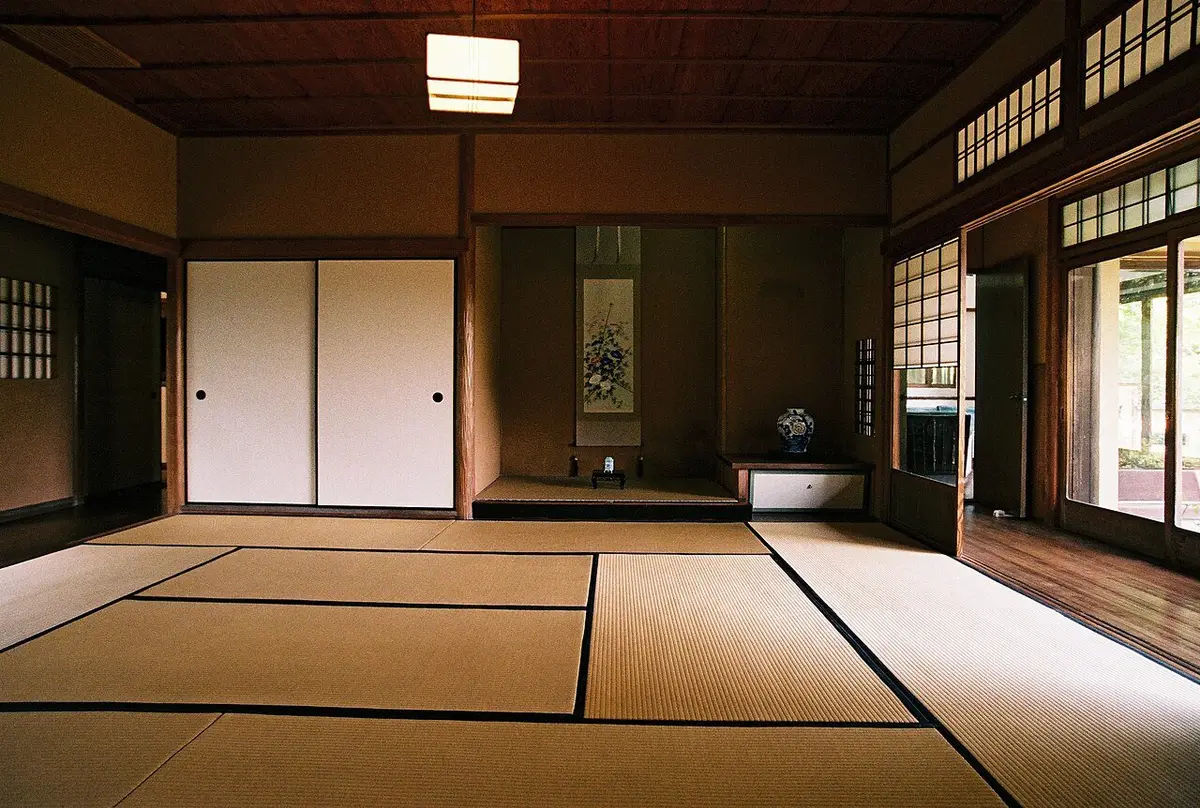
A Japanese “zashiki” laid with tatami, where sitting on the floor follows a precise etiquette.
Photo: halfrain, via Wikimedia Commons, licensed CC BY-SA 2.0
Korean ondol: when the floor warms the home
In Korea, the culture of sitting on the floor is tied to “ondol” underfloor heating, which the Korea Heritage Service estimates has been handed down on the peninsula for more than two thousand years. Official Korean sources state that ondol covering the entire floor developed in the Goryeo period and became universal under Joseon. With the floor warm and clean, people took off their shoes to sit and sleep on it, and low tables took the place of chairs.
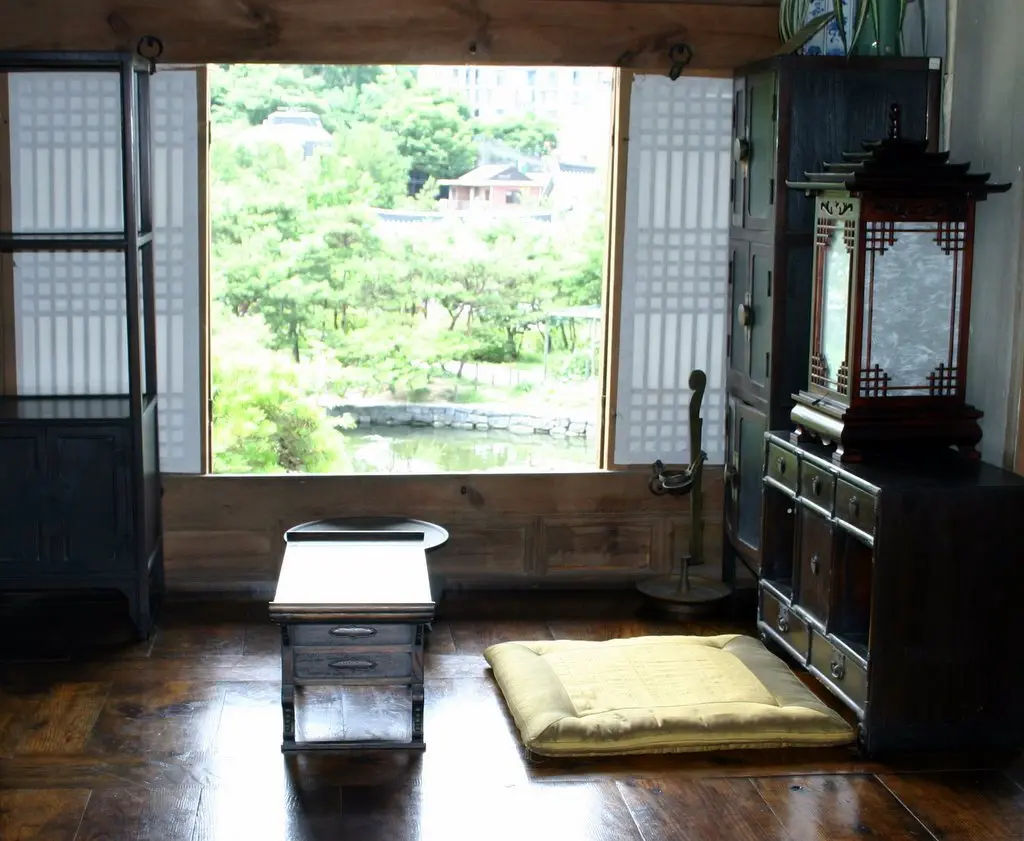
A room in a traditional “hanok” in Seoul: a floor cushion and a low table, the legacy of ondol culture.
Photo: Robert (Picasa), via Wikimedia Commons, licensed CC BY 3.0
India and Central Asia
The Indian baithak
In India, floor seating is known as “baithak”: a mattress spread on the floor, the “gaddi”, backed by long bolsters called “masnad”. It was used in guest rooms and traditional mansions (havelis) to receive visitors, and India also has raised wooden platforms called “takht”, furnished with mattresses and cushions.
Kurpacha and tapchan in Central Asia
In Uzbekistan, guests gather around the “dastarkhan”, a cloth spread on the floor or on a low table, seated on quilted cotton mattresses called “kurpacha”. The “tapchan”, a raised wooden platform covered with rugs and mattresses, is a familiar place to sit in courtyards and teahouses.
What do these traditions share?
Across different climates and languages, these cultures share similar elements: a comfortable mattress close to the floor, backrests along the walls, a low table in the middle, and an etiquette that arranges the seats and honours the guest. At heart, floor seating is an architecture of human connection before it is furniture.
The Sahrawi majlis today: from the tent to the home
The spirit of the Hassani khaima has passed into modern homes as the “Sahrawi majlis”: mattresses and backrests upholstered in geometric-patterned fabrics, lined along the walls around the tea table, combining the authenticity of the desert with the comfort of contemporary living.
In this spirit, Dakhla Majalis handcrafts Sahrawi majlis in the city of Dakhla, with high-quality foam guaranteed for 25 years and delivery to every city in Morocco for 100 dirhams. Browse our designs at www.dakhlamajalis.com.
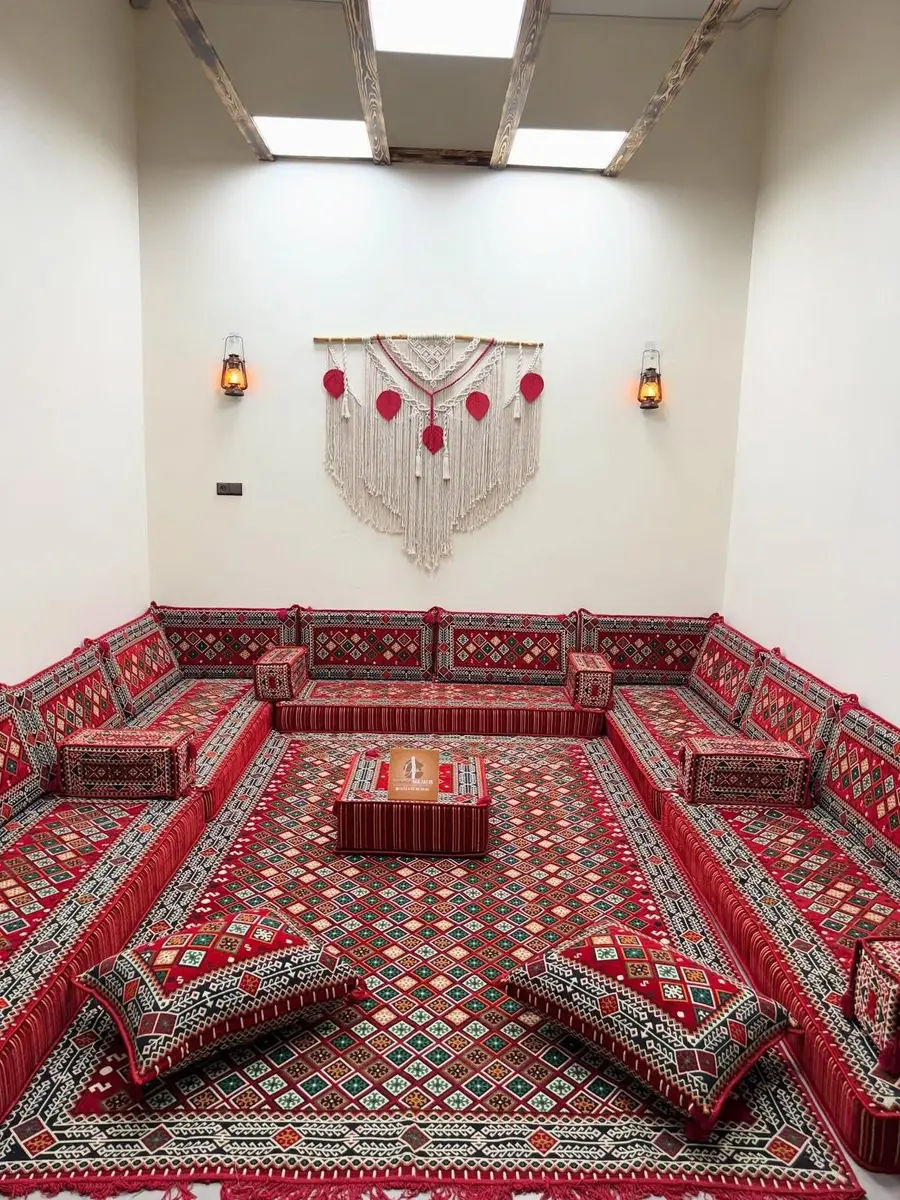
A Sahrawi majlis by Dakhla Majalis: mattresses and backrests along the walls around a low table.
Photo: Dakhla Majalis
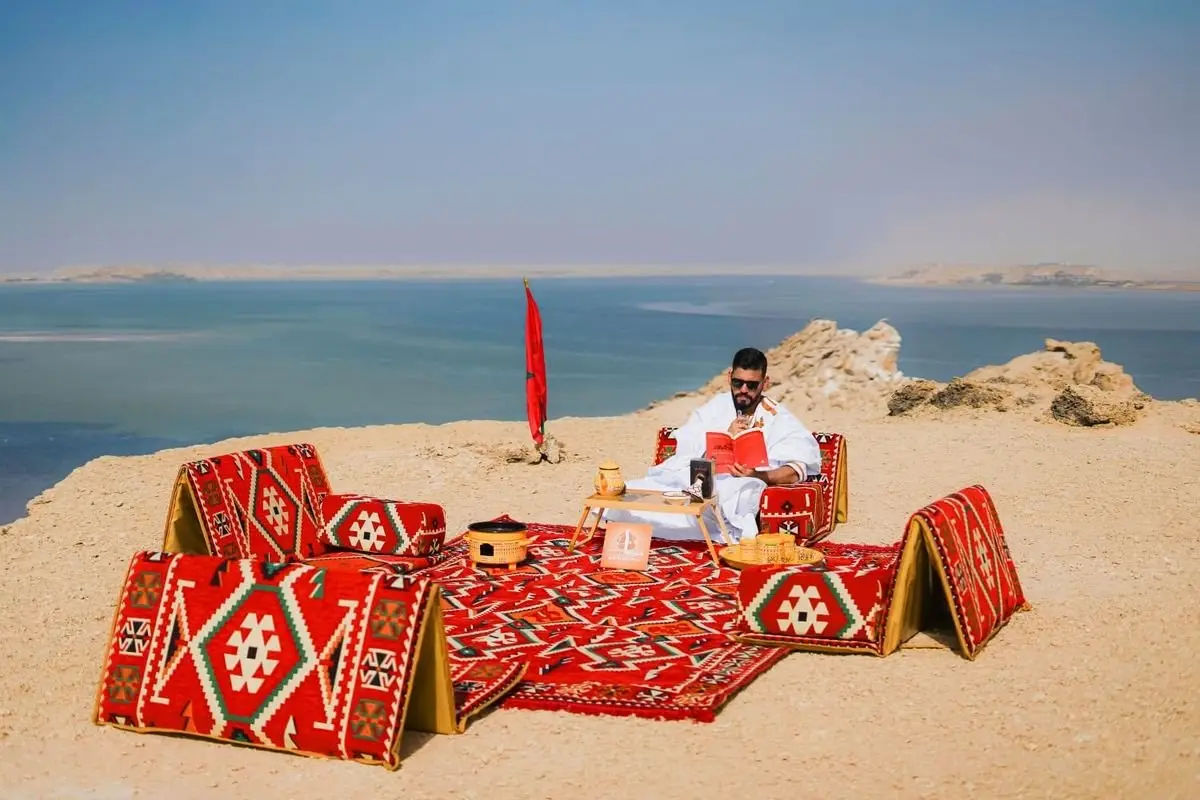
An open-air majlis on a beach in Dakhla, carrying on the spirit of the tent.
Photo: Dakhla Majalis
Frequently asked questions
What is the difference between a majlis and floor seating?
Floor seating is the way of sitting and its low furniture of mattresses and backrests; the majlis is the social space where guests are received and gatherings held, usually furnished with floor seating.
Is floor seating only an Arab tradition?
No. It is found in many cultures, including the Hassani khaima, the Gulf majlis, the Moroccan salon, the Ottoman divan, Japanese tatami, Korean ondol, the Indian baithak and the majlis of Central Asia.
Where does the word “divan” for a seat come from?
The word is Persian in origin and meant “register”; it then came to mean an office and a council of state, and from there passed to the long seat lining the walls of those halls.
Does a Sahrawi majlis suit modern homes?
Yes. It is made to measure for the room, brings warmth and authentic character to the salon, and seats a large number of guests.